
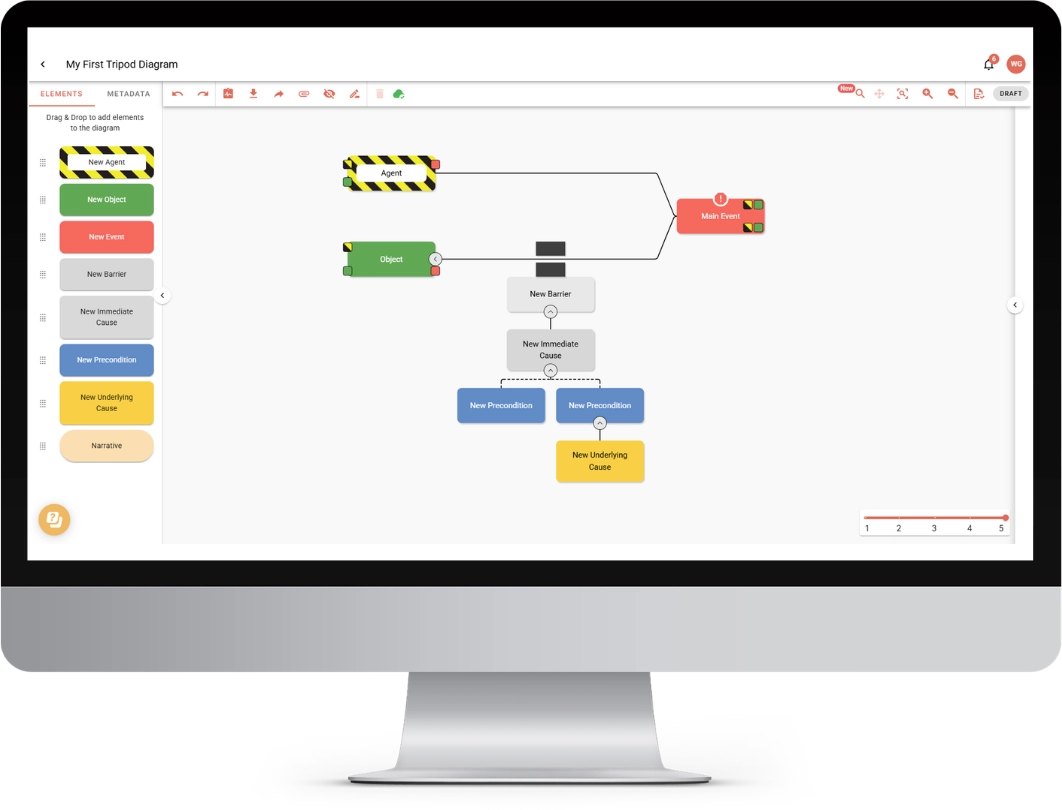


What is Tripod Beta?
Tripod Beta is an internationally recognised incident investigation methodology, originally developed by Shell International and the University of Leiden in the 1990s.
It traces the causes of any incident through three structured layers: what happened (the sequence of events), how it happened (which barriers failed), and why it happened (the underlying organisational causes).
The Tripod Foundation, published through the Energy Institute, maintains and updates the methodology, which is used across Oil & Gas, Aviation, Mining, Energy and Construction worldwide.
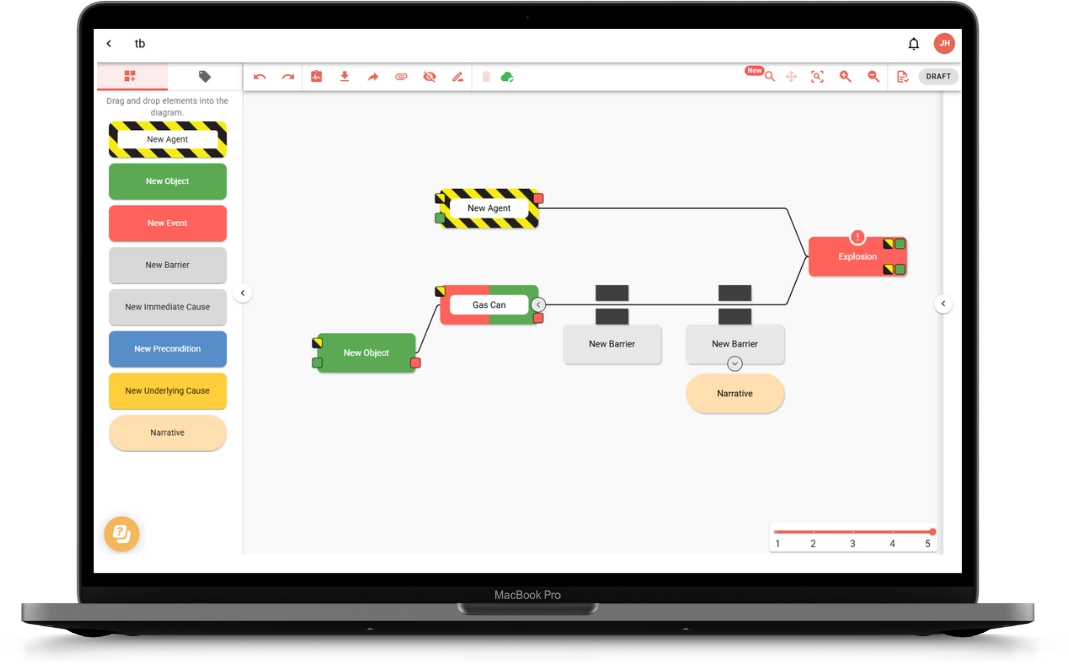
Incident Insight brings the Tripod Beta methodology into a cloud-based tool. Investigators build the Tripod tree visually using a drag-and-drop canvas, with structured prompts guiding each step - no separate methodology training required to produce a valid, defensible analysis.
How a Tripod Beta Analysis works

Tripod Beta in Incident Insight
From the moment an incident is logged to the final causation path, Tripod Beta in Incident Insight keeps the methodology intact and removes the friction.
5 Advantages of the Tripod Beta Methodology
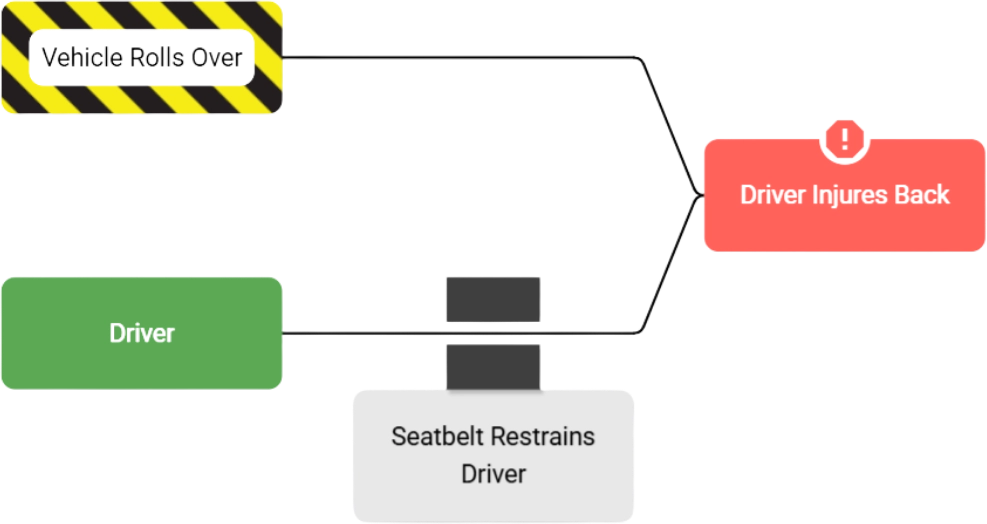
Tripod Beta is not just another RCA framework. It is a structured, industry-tested methodology designed to find the organisational weaknesses that allow incidents to happen, not just the people closest to them.
1.
Moves Beyond Human Error
2.
Structured, Repeatable Framework
3.
Identifies Systemic Weaknesses
4.
Focuses on Barrier Failures
5.
Recognised Across High-Risk Industries
WHO USES IT
The Top 5 Industries Using
Tripod Beta Diagrams
From offshore platforms to aviation maintenance, Tripod Beta is the methodology of choice wherever the consequences of getting it wrong are highest.
For accredited practitioners
A Working Environment for Tripod Beta Trainers and Trainees
Tripod Beta trainers use Incident Insight to give trainees a working environment that mirrors real-world investigation software from day one.
Trainees practise building Tripod Beta trees, classifying Basic Risk Factors, and documenting causation paths in the same tool they will use in the field. Methodology guidance is embedded throughout - reinforcing what trainers teach rather than contradicting it.
Trusted by Safety Teams
Worldwide
Incident Insight is part of the Salus Suite, used by organisations across 25 countries and 43 industries to manage risk and investigate incidents.
"Salus Suite offers a competitive product which is a market leader in safety visualisation. As well as their fast and personal customer support where the team will answer any of my questions in no time"

Quentin Perneel - Incident Management Officer
"Salus Suite is a very useful tool which has facilitated our cumulative risk assessment process. In particular, the ability to link and import data from Excel has proven to be a very accessible way for us to present data exactly as required."

Richard Emery - Principal Consultant
"Salus Suite makes it easy to discuss risk. It’s enabled us to turn complex situations into a simple picture."

Baering Logason – CISO
Tripod Beta in Incident Insight - FAQs
Everything you need to know before getting started.
Ready to investigate with Tripod Beta?
Join organisations across 25 countries who use Incident Insight to understand the real causes of incidents - and prevent the next one.